How to Create a Backyard Garden?

A backyard garden is an extension of home life, fulfilling the needs for relaxation and family interaction, while also adding natural vitality and aesthetic appeal to the home. Creating a backyard garden doesn’t require extreme luxury; the core principle is to “suit your family’s needs, fit the space, and balance beauty and practicality.” Regardless of space size or budget, with proper planning and the right style elements, you can create a warm and inviting garden. The following is a complete guide from initial preparation to detailed implementation, helping you avoid pitfalls and achieve efficient results.
I. Initial Planning
Thorough planning before construction is key to avoiding rework later. The core revolves around three main aspects: “needs, space, and budget.” First, clarify your core needs: what is the main purpose of your backyard garden—is it for family play, barbecues and gatherings, gardening, or quiet relaxation? Different needs correspond to different functional layouts: a family-friendly garden requires ample lawn space and safe play facilities; a gathering-oriented garden needs a barbecue area and dining area with smooth traffic flow; a gardening-focused garden requires consideration of sunlight and drainage for plant growth; and a relaxation-oriented garden emphasizes creating a tranquil corner with comfortable seating.
Secondly, accurately measure the space and survey the environment: measure the length and width of the backyard, including irregular corners (such as corners and slopes), and draw a simple floor plan; pay close attention to lighting conditions to prepare for plant selection, and understand the drainage situation to avoid water accumulation in low-lying areas, which affects plant growth and usability.
Finally, set a reasonable budget: based on the space size and needs, create a budget divided into four main categories: basic renovation (groundwork, drainage, fencing), functional facilities (seating, barbecue grill, play equipment), plant cultivation (flowers, trees, soil improvement), and decorative lighting (lamps, decorative items). Prioritize the budget for basic renovation (drainage and ground treatment directly affect the garden’s durability), and then adjust the budget for functions and decorations according to your needs.
II. Style Positioning
The style of your backyard garden should consider both “personal preferences” and the “overall style of the house” to avoid stylistic inconsistencies. The following are several adaptable and easy-to-implement mainstream styles that you can choose from based on your needs:
1. Simple and Natural Style: The easiest style to implement, focusing on native plants and natural materials, without the need for complex decorations. The ground can be paved with gravel, treated wood, or lawn, complemented by wicker chairs and wooden flower stands. Native, easy-to-grow plants are chosen to create a relaxed and casual atmosphere, suitable for families with limited budgets who appreciate a natural feel.

2. American Countryside Style: Emphasizes practicality and a relaxed atmosphere, with the core focus on creating an ‘outdoor living space’. American-style courtyards can also include wooden terraces, barbecue areas, outdoor dining sets, large lawns, and vibrant flowers such as cosmos (usually translated as ‘globe amaranth’). Retro American decor elements like cast-iron lanterns and wooden signs can perfect the overall style, making it suitable for families who enjoy outdoor gatherings and seek a lively ambiance.

3. Japanese Zen Style: Centered on “simplicity, minimalism, and natural tranquility,” suitable for small backyards or families who prefer a quiet environment. Sand, moss, and rocks are used to create a landscape, complemented by low shrubs and bamboo elements, such as bamboo fences and screens. A mini tatami area or wooden seating area can be included, and warm white lighting is used to create a peaceful and serene atmosphere.
4. English Flower Garden Style: Characterized by “dense planting of flowers,” suitable for families who enjoy gardening. A layered flower garden is created, with low-growing herbs in the foreground, shrubs in the middle ground, and tall flowering trees in the background. Choose varieties that bloom year-round, such as roses, lavender, and sage, complemented by gravel paths and wooden flower stands. This ensures the garden has visual interest and rich colors throughout the seasons, but note that ongoing plant maintenance costs will be higher.
III. Core Element Creation
The core of a backyard garden is “functional zoning + element combination.” Based on the initial planning needs and style, focus on creating the following key areas and elements:
1. Functional Zoning
Divide the space into functional zones based on core needs. Common zoning combinations include:
Leisure and relaxation area + planting area, suitable for small backyards; Lawn activity area + dining area + planting area, suitable for medium to large backyards and families with children; Barbecue area + dining area + quiet relaxation area, suitable for families who enjoy entertaining. When zoning, pay attention to traffic flow design to ensure smooth movement from the entrance to each functional area; use natural methods to softly divide areas, such as greenery, flower hedges, and gravel paths, avoiding hard partitions such as brick walls, which can make the space feel cramped.
2. Ground Treatment
The ground is the foundation of the garden, and the material should be selected according to the function of different areas:
For the activity lawn area, choose a durable, wear-resistant lawn variety, suitable for family fun and comfortable underfoot; if on a limited budget, artificial turf can be used, requiring no maintenance.
For the rest/dining area, use treated wood, outdoor tiles, or gravel. Treated wood feels warm and fits a natural style, outdoor tiles are wear-resistant and easy to clean, suitable for dining areas, and gravel is low-cost and suitable for a minimalist style.
3. Plant Selection
Plants are the soul of the garden; avoid choosing expensive and difficult-to-maintain varieties. First, select plants based on sunlight: full-sun areas (more than 6 hours of sunlight per day) can plant roses, sunflowers, and lawn; semi-shaded areas (3-6 hours of sunlight) can plant hydrangeas and Monstera deliciosa; shady areas (less than 3 hours of sunlight) can plant moss, ferns, and Aspidistra elatior. Second, create plant layers: from low to high, including ground cover plants, herbaceous flowers (such as cosmos and lavender), shrubs (such as azaleas and camellias), and trees (such as cherry trees and osmanthus trees). A layered design is more aesthetically pleasing. Finally, consider seasonal landscapes: combine evergreen plants (such as holly and pine) with plants that bloom in all seasons to ensure greenery in winter and avoid seasonal barrenness.
4. Functional Facilities

Configure functional facilities according to core needs:
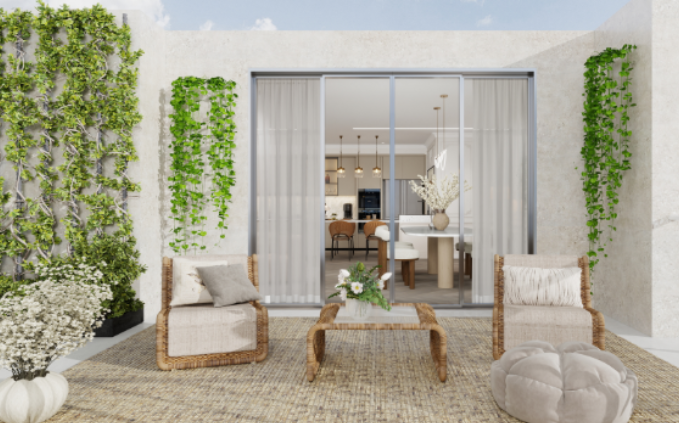
Rest area: Place outdoor seating, using rattan, wood, or metal materials, with a small coffee table. A sunshade or simple awning can be added for increased comfort.
Dining/barbecue area: Set up outdoor tables and chairs. For the barbecue grill, choose a stainless steel or brick-built model (brick-built models require pre-reserved smoke vents). Locating it near the kitchen window makes it easier to transport ingredients.
Children’s play area: Install small playground equipment, such as swings, slides, and sandpits. Choose safe materials with rounded edges, and lay soft ground coverings such as lawn or rubber mats to prevent injuries from falls.
Planting area: Build wooden or wrought-iron trellises for climbing plants, and place storage boxes for gardening tools. If the budget allows, an automatic irrigation system can be installed to save watering time.
See also: Lamina’s Strategy for Achieving Financial Independence
IV. Decoration and Lighting
Through the combination of decoration and lighting, the garden can be beautiful during the day and cozy at night:
1. Decorative Elements: Choose decorative items that match the style, such as rattan storage baskets, wooden signs, and terracotta flower pots for a natural style; wrought iron lanterns, vintage paintings, and colorful cushions for an American country style; and stone lanterns, bamboo curtains, and weathered wood ornaments for a Japanese style. Personalized elements can also be added, such as a family photo wall, children’s handicrafts, and homemade plant markers, to make the garden more inviting.
2. Lighting Design: Layered lighting should be used, balancing practicality and atmosphere. Basic lighting can use solar lawn lights or courtyard ceiling lights, installed along main paths and fences to ensure safe passage at night; ambient lighting can use string lights wrapped around flower racks and branches. Wall lights can be installed on walls or around seating areas. Ground lights can be buried next to plants to highlight plant layers and create a warm atmosphere. All outdoor lighting fixtures should be selected with a waterproof rating of IP65 or higher to prevent damage from moisture.
V. Pitfalls to Avoid and Maintenance Tips
1. Pitfalls to Avoid:
Before construction, check the backyard drainage. Drainage ditches can be set up in low-lying areas and covered with gravel, which is both beautiful and practical, preventing water accumulation that can lead to plant root rot and ground damage;
Avoid blindly following trends and planting expensive plants: Beginners should prioritize easy-to-grow native varieties to reduce maintenance difficulties;
Avoid planning a barbecue area, play area, and planting area simultaneously in a small backyard, as this will lead to overcrowding;
2. Maintenance Tips:
Plant maintenance: Regularly prune branches and leaves to maintain shape and ventilation, and prevent pests and diseases;
Facility maintenance: Clean outdoor furniture 1-2 times a year, and apply preservative paint to wooden furniture for maintenance; clean the barbecue grill promptly after use to prevent bacterial growth;
Ground maintenance: Regularly clean up fallen leaves and weeds, and regularly mow and replant the lawn.
Conclusion
The core of backyard garden design is to make the space suitable for the family’s lifestyle, rather than pursuing standardized aesthetics. Regardless of the size of the space or the budget, by adhering to the principles of “prioritizing needs, natural integration, and ease of maintenance,” and proceeding step by step from initial planning to detailed implementation, you can create a backyard garden that not only meets your leisure and interaction needs but also allows you to experience the vitality of nature. It doesn’t have to be perfect, but it can be a place filled with laughter and joy, becoming the warmest sanctuary in your home life.